The Temper of Communism: Lenin, Morality, and Soviet Leadership

The Temper of Communism

Lenin transformed Marxist theory into a practical framework for revolutionary action, giving communism a moral and political temperament that has shaped Soviet governance for decades. Beyond intellectual abstraction, Lenin’s vision emphasized a militant dedication to the party and the cause, creating a system where morality, politics, and economic planning were inseparably intertwined. Today, the legacy … Read more

Mao and the Rise of Communism in China: A Historical Overview

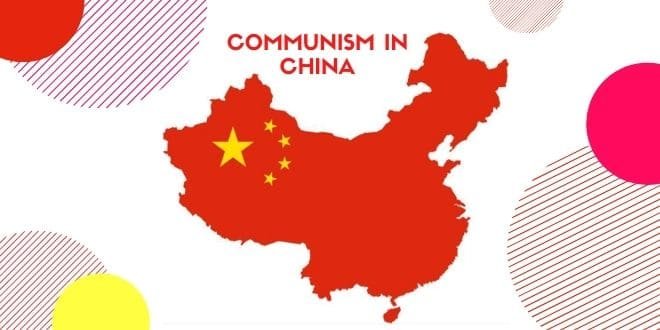
Communism in China

Communism in China transformed from an imported ideology into a uniquely Chinese revolution under the leadership of Mao Tse-tung. Beginning in the early 1920s, Mao adapted Marxist-Leninist principles to China’s largely peasant society, emphasizing rural-based revolution, guerrilla warfare, and the central role of the peasantry. From his early philosophical studies to the Cultural Revolution, Mao … Read more

Socialism in One Country: Stalin’s Theory and Its Global Impact

Socialism in One Country

“Socialism in One Country” was Stalin’s most influential theoretical contribution to communism, reshaping Marxism and Leninism into a nationalist model of socialism. By asserting that socialism could be built within a single state rather than requiring global revolution, Stalin transformed Soviet Russia into an industrial and military power. This doctrine not only altered Marxist theory … Read more

Democratic Centralism: Lenin’s Model of Party Power and Control

Democratic Centralism

Democratic centralism is a political and organizational principle developed by Vladimir Lenin to structure communist parties and revolutionary movements. It combines internal debate with strict unity in action, creating a hierarchical system where decisions made by higher authorities bind all lower levels. This model shaped the governance of the Soviet Union and influenced communist movements … Read more

The Vanguard of the Proletariat: Lenin’s Blueprint for Communist Rule

The Vanguard of the Proletariat

The concept of the vanguard of the proletariat lies at the heart of Lenin’s revolutionary strategy. It describes a disciplined, elite segment of the working class tasked with leading society toward socialism, guiding the broader proletariat while maintaining centralized authority. This doctrine shaped the Bolshevik Party, the Communist International, and ultimately the governance of the … Read more

The Problem of Success in the Bolshevik Revolution

The Problem of Success in Bolshevik Revolution

The Bolshevik Revolution of November 7, 1917, achieved astonishingly rapid success, but this victory created unforeseen challenges. Lenin and the Bolshevik Party, skilled in revolutionary tactics, suddenly faced the complex task of transforming a clandestine group into a functioning government. Lacking a clear program, the party relied on slogans, improvisation, and Lenin’s leadership to navigate … Read more

Lenin’s Vision of Proletarian Revolution and the Withering State

Revolution in Prospect

Lenin’s State and Revolution provides a blueprint for the proletarian revolution and the transition from capitalism to socialism. Analyzing Marx’s theory and revolutionary history, Lenin emphasized the necessity of class struggle, the dictatorship of the proletariat, and the eventual withering away of the state. While visionary, his expectations often diverged from practical outcomes, shaping the … Read more

Lenin’s Strategic Approach to the March Revolution in Russia

Approach to March Revolution

The March Revolution of 1917 marked a turning point in Russian history, with Lenin seizing the moment to merge the bourgeois and socialist revolutions. Observing from exile, Lenin adapted Marxist theory to the rapidly unfolding political realities, prioritising practical action over rigid ideology. His strategy redefined the role of democracy, majority rule, and the soviets … Read more

Lenin’s Analysis of Imperialist Capitalism and Its Global Impact

Imperialist Capitalism

Imperialist capitalism represents the highest stage of capitalist development, where monopoly and finance capitalism dominate, and nations compete globally for resources, markets, and labor. Lenin analyzed this phase in the context of World War I, highlighting the betrayal of socialist parties, the temporary pacification of the European proletariat, and the exploitation of underdeveloped countries. Understanding … Read more

Bourgeois and Proletarian Revolutions: Marxist Theory, Lenin, and Trotsky

The Bourgeois and the Proletarian Revolutions

The concept of bourgeois and proletarian revolutions lies at the core of Marxist political theory. Marx, Engels, Lenin, and Trotsky debated whether societies must pass through fixed historical stages—from feudalism to capitalism and finally socialism—or whether revolutionary transitions could merge. The Russian Revolution transformed this theoretical debate into a historical reality, reshaping Marxism and revolutionary … Read more