Development of the Principle of Nationalism: Origins, Growth, and Global Impact

Development of Principle of Nationalism

The development of the principle of nationalism marks one of the most transformative forces in modern political history. While largely absent during the Middle Ages, nationalism emerged gradually from the fourteenth century and matured rapidly during the eighteenth and nineteenth centuries. Shaped by dynastic conflicts, revolutionary movements, and wars, nationalism evolved from a cultural sentiment … Read more

State vs Nation vs Nationality: Clear Definitions & US Perspectives

State, Nation, and Nationality Distinguished

Understanding the difference between state, nation, and nationality is crucial in political science, law, and cultural studies. These terms are often used interchangeably, yet they refer to distinct concepts — from legal political entities to cultural identity and psychological belonging. This guide explains their meanings, explores how they’ve evolved, and shares relevant U.S. statistics about … Read more

Constituent Elements and Attributes of the State Explained

Constituent Elements and Attributes of the State

The constituent elements and attributes of the state form the foundation of political organization in political science. A state is not merely a collection of people living within a territory; it must possess an organized government, sovereignty, and continuity. These elements distinguish a true state from other social or political groupings. This article explains the … Read more

Why Territory is Essential for the Existence of a State

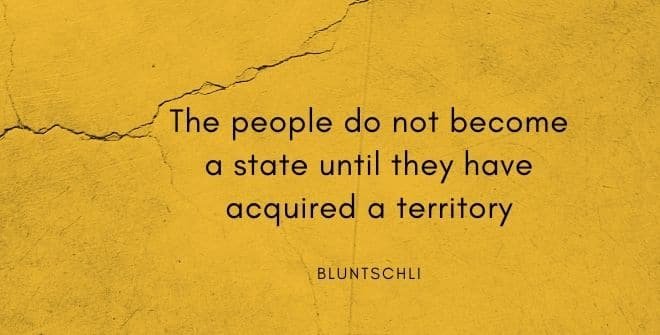
The Necessity of Territory in the state

Territory is one of the core elements that define a state. Unlike voluntary associations or organizations, a state cannot exist without a defined land area where its people reside and over which its authority is exercised. From historical military occupations to modern airspace regulations, territory provides the spatial and juridical foundation for sovereignty, governance, and … Read more

Understanding Population in Political Science: Definition & Importance

What is the Population in Political Science?

In political science, population refers to the group of human beings that make up the people of a state. It is a foundational element of the state because without people — citizens, residents, and subjects — there can be no functioning political organization, governance, or collective will. The population must be examined both as citizens … Read more

State and Voluntary Associations: Power, Sovereignty, and Society

Differences between the State and Other Associations

The State, too, is a group of human beings. It comes into existence, like other groups, to satisfy human needs through concerted action. While each group has its distinctive character and problems, all pursue their activities to secure a happy and good life. In spite of this close resemblance between the State and other associations, … Read more

What Is the State? Meaning, Definitions, and Key Concepts

What is the State

The concept of the state is central to political science, constitutional law, and international relations. A state is not merely a government or a nation; rather, it is a politically organized community established to promote common interests and collective welfare. While governments may change through elections, revolutions, or legal processes, the state endures as a … Read more

Relationship of Political Science with Other Social Sciences Explained

Relationship of political science with other social sciences

Political science does not exist in isolation. Its growth, theories, and methods are deeply connected with other social sciences such as sociology, history, economics, psychology, geography, and anthropology. Rather than being a fully interdisciplinary field, political science advances through specialized interactions at the margins of related disciplines. These intellectual exchanges help explain political institutions, state … Read more

The Province of Government: Balancing State Intervention and Individual Liberty

Observation The Province of Government

The province of government refers to the scope and limits of state action in regulating social, economic, and moral life. Classical debates between individualism and socialism have failed to offer a fixed boundary between legitimate and illegitimate government functions. As thinkers like Huxley, Mill, Hobhouse, and Burke observed, the role of the state evolves with … Read more