Historical Arguments Against Women’s Political Enfranchisement and Modern Context

Women suffrage

The debate over women’s political enfranchisement once centered on whether extending the vote to women would disrupt traditional social roles and family structures. Opponents argued that women’s primary duties in the home made political participation inappropriate. Over time, these views were challenged and overturned, leading to full suffrage with the ratification of the 19th Amendment … Read more
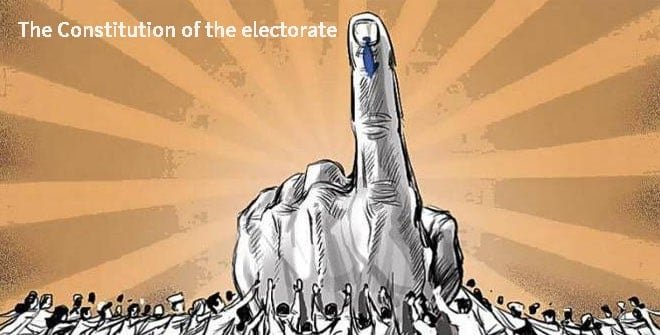
The Constitution of the Electorate: From Restricted Voting to Universal Suffrage

The Constitution of the electorate

The constitution of the electorate—who is entitled to vote and under what conditions—has evolved dramatically across history. Once defined by property ownership, religion, race, gender, and tax qualifications, suffrage systems gradually transformed under democratic pressure. From 19th-century Europe to the United States, political reform movements dismantled restrictive voting laws and replaced them with near-universal, direct, … Read more

Importance of the Electoral Function in a Representative Democracy

Nature of the electoral function

The importance of the electoral function lies at the very heart of representative government. Through elections, citizens collectively shape the form of government, select public officials, and influence public policy. In modern democracies, the electorate is no longer seen merely as a passive body of voters but increasingly as an active organ of governance itself. … Read more

Succession of Government Forms: Evolution, Theory, and Political Change

Succession of government forms

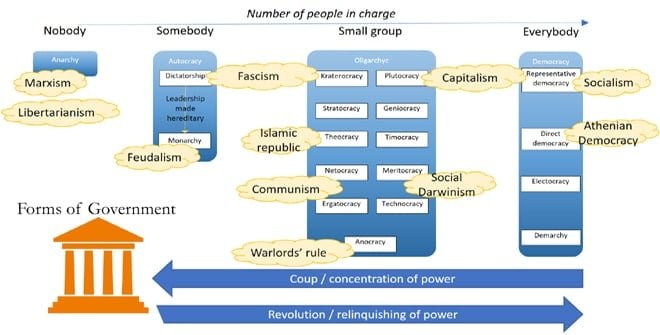
The succession of government forms explains how political systems evolve over time in response to social change, power struggles, and shifting political consciousness. From monarchy and aristocracy to democracy and tyranny, no state has preserved a single form of government throughout its history. Classical thinkers such as Plato, Aristotle, Polybius, Machiavelli, and later scholars like … Read more

Other Forms of Government: Confederate, Bureaucratic, Popular, and Paternal Systems Explained

Other Forms of Government

Beyond cabinet, presidential, federal, and unitary systems, political science identifies several other forms of government based on sovereignty, administrative structure, and functional scope. These include confederate government, bureaucratic government, popular government, and individualistic versus paternalistic government. Each model reflects a distinct balance between central authority, state autonomy, administrative professionalism, and public participation. Understanding these forms … Read more

Unitary and Federal Government: Structure, Power Distribution, and Key Differences

Unitary And Federal Government

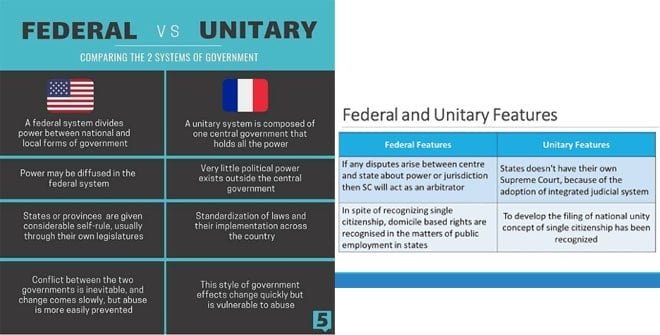
Governments across the world are commonly classified based on how political power is distributed between central and local authorities. Two dominant models—unitary government and federal government—represent contrasting approaches to governance. In a unitary system, all governing authority flows from a single central body, while in a federal system, power is constitutionally divided between national and … Read more

Key Features of Presidential Government Explained with U.S. Examples

Presidential government

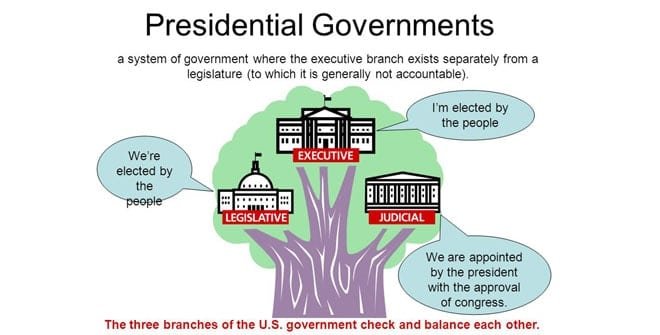
The presidential government is a distinct system of governance characterized by a clear separation between the executive and legislative branches. Unlike parliamentary or cabinet systems, the executive does not depend on legislative confidence to remain in office. The United States represents the most influential and widely studied example of this system, where the president acts … Read more

Cabinet Government Explained: Meaning, Features, and Global Examples

Cabinet Government

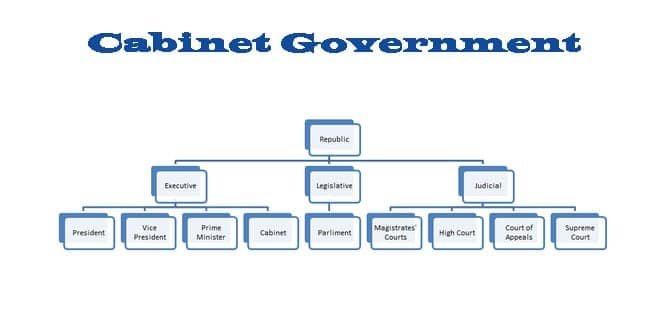
Cabinet government is a form of parliamentary system in which executive authority is exercised by a council of ministers collectively responsible to the legislature. Unlike presidential systems, cabinet government blends executive and legislative powers, ensuring accountability through legislative confidence. Originating in Great Britain, this system has influenced governance structures across Europe and the Commonwealth, shaping … Read more

Understanding Forms of Government and the State

Forms of government

The study of states and their governments reveals that while all states share essential elements like population, territory, government, and sovereignty, their organization and functioning differ widely. Political scientists classify governments—monarchy, aristocracy, democracy, and dictatorship—based on sovereignty, power distribution, and citizen participation. Understanding these forms is key to analyzing the strengths, weaknesses, and efficiency of … Read more

Understanding Political Power: The State as a Moral and Administrative Entity

The nature of political power

Political power is not an abstract force—it is a trust exercised by the State through its officials, grounded in both administrative structure and moral responsibility. The State shapes the lives of its citizens, providing avenues for self-expression and societal contribution while demanding vigilance and accountability. By understanding how the will of the State arises, citizens … Read more