Associations of States

Associations of States

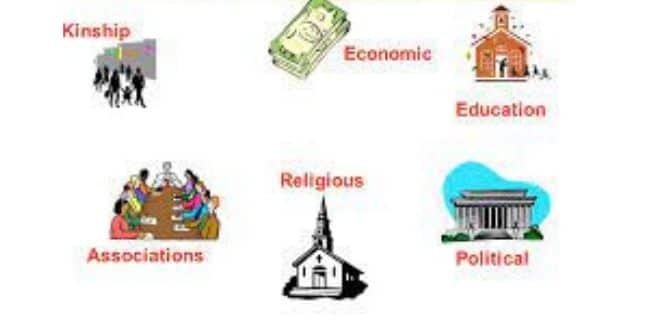
International associations of states arise when two or more sovereign countries cooperate to regulate shared political, economic, or administrative interests. Unlike federations, these associations preserve state sovereignty while enabling collaboration through treaties, alliances, confederations, and global organizations such as the United Nations. Understanding the nature, types, and evolution of international associations is essential to modern … Read more
Understanding What the Executive Branch Embraces in U.S. Government

What The Executive Branch

The executive branch is one of the three core organs of the United States government, responsible for enforcing and executing the laws passed by the legislature and interpreted by the judiciary. It includes the President, the Vice President, Cabinet members, executive departments, and countless agencies and officials. Unlike the deliberative nature of the legislature, the … Read more

Nature of Executive Power: Authority, Functions, and Limits in the U.S.

The Executive Power

Executive power is a central pillar of constitutional government, entrusted with enforcing laws, directing administration, conducting foreign relations, commanding the military, and exercising clemency. In the United States, executive authority reflects a carefully balanced design—strong enough to govern effectively, yet constrained to prevent abuse. Rooted in constitutional theory and refined through historical practice, executive power … Read more

Understanding the Theory of Social Contract: Origins, Thinkers & Modern Relevance

The Theory Of Social Contract

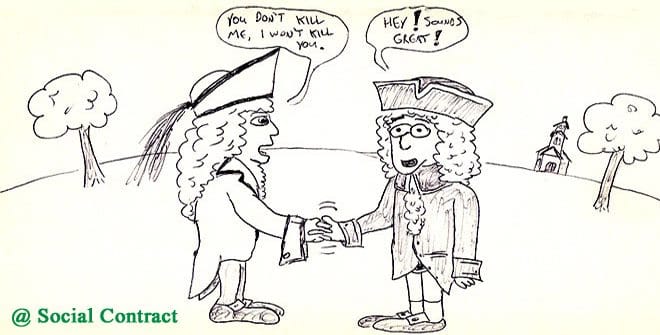
The Theory of Social Contract explains how humans transitioned from a pre-political state of nature into organized civil society through mutual consent. Advocated by Hobbes, Locke, and Rousseau, this political philosophy argues that individuals willingly surrendered certain natural freedoms to form a governing body that ensures security, law, and order. Today, the principles of this … Read more

Understanding the Force Theory of the Origin of the State: Meaning & Criticism

Force Theory Of Origin Of State

The Force Theory of Origin of the State explains how early political communities emerged through conquest and domination. According to this theory, the State was established when stronger individuals or groups subjugated the weak through force, creating social order and governance. Though historically influential, it remains controversial because it suggests that power and coercion—rather than … Read more

Divine Theory of Origin of the State: Meaning, Doctrine, and Evaluation

Divine Theory Of Origin Of State

The origin of the State has long fascinated political thinkers, yet it remains shrouded in mystery. While anthropology and comparative studies shed partial light, they fall short of offering a definitive explanation. As a result, scholars developed speculative theories to understand how the State came into existence. Among these, the Divine Theory of Origin of … Read more

Understanding the Organic Theory of the State: Interdependence of Individuals & Society

The Organic Nature Of The State

The Organic Theory of the State argues that the State functions like a biological organism, where individuals—like cells—are interdependent parts of a larger whole. This theory contrasts sharply with individualistic views that see society as just a collection of isolated individuals. Exploring this theory reveals deep insights into political philosophy, the role of government, and … Read more

Community and Institutions in Political Science: Meaning, Types, and Importance

Community and Institutions

Community and institutions are foundational concepts in Political Science, yet they often lack precise definitions. A community refers to people living together within a shared area, bound by common life, values, and consciousness. Institutions, on the other hand, are enduring structures through which associations realize their collective aims. From family and nation to parliament and … Read more

State vs Associations: Key Differences & Social Roles Explained

State And Associations

In sociology and political science, both the State and associations are organized groups of people, but they differ fundamentally in purpose, structure, membership, authority, and power. While voluntary associations form to meet collective needs like cultural, economic, or recreational goals, the State exists to provide overarching governance, territorial order, and legal authority over all citizens. … Read more

Understanding the Nature of State and Society: Key Differences

Nature of State and Society

The distinction between the State and society is fundamental for understanding political and social organization. While society emerges naturally from human instincts for association, the State is a deliberate creation of human reason and will. Society encompasses all social institutions—families, clubs, religious groups—whereas the State is a territorial, organized, and coercive institution with a single … Read more