League of Nations: Members, Objectives, Powers, and Decline
the league of nations

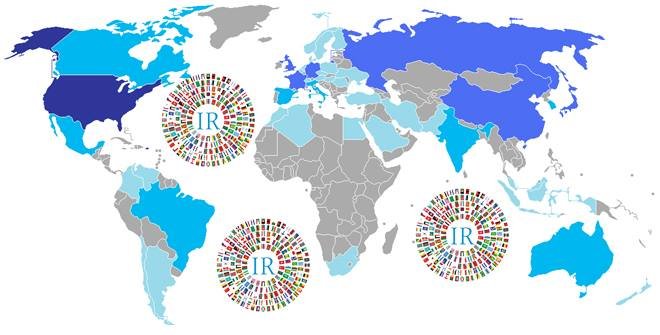
The League of Nations was the first worldwide intergovernmental organization whose principal mission was to maintain world peace. It was founded on 10 January 1920, following the Paris Peace Conference that ended the First World War, and ceased operations on 20 April 1946. “The League of Nations failed not because its ideals were wrong, but … Read more
International Administrative Unions: Origins, Structure, and Global Role

International Administrative Unions

International Administrative Unions term used until the middle of the 20th century, for special-purpose governmental associations set up in the second half of the 19th century. “International Administrative Unions represent humanity’s earliest practical experiments in organized global cooperation.” Nature and Purposes:- Many states have associated themselves together to form what has been styled public international … Read more

International law

International law

International law is the body of principles and rules recognized as binding among states that govern their relations and interactions. It outlines states’ rights and obligations and provides procedures for protecting those rights and addressing violations. Originating from historic customs and treaties, international law today encompasses public treaties, customary practice, and broader legal reasoning that … Read more

Nature of International Relations

Nature of International Relations

International Relations is a vital branch of political science that examines how states interact with one another in both peace and conflict. It focuses on diplomatic practices, war, treaties, international law, and cooperation among nations. The nature of international relations is shaped not only by governments but also by geography, population, economics, culture, military power, … Read more

Third World in International Relations

Third World

The Third World emerged in the post-World War II era in international relations and conditions when the world was divided into opposite ideological blocs. During those days, the process of decolonization was at its zenith, as a result of which many Asian and African countries got independence, and they joined the international community as sovereign … Read more

Non-alignment Movement

Non-Alignment

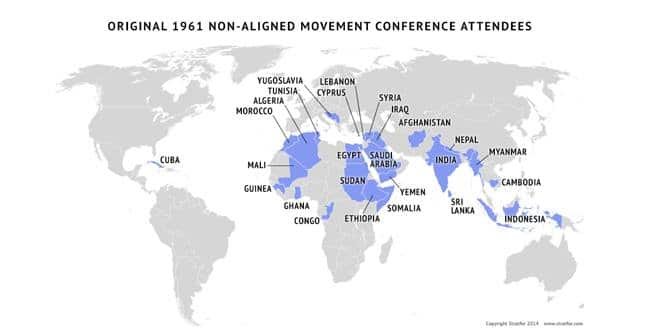
As already observed in the previous article, if there is any outstanding contribution of newly independent states of Asia, Africa, and Latin America worth mentioning, it gives concrete shape to the concept of non-alignment. The concept of non-alignment gained currency in 1955 at Bandung Conference, albeit it was the uppermost in the mind of Pandit … Read more

De-Colonization and Asian African Resurgence

De-Colonization

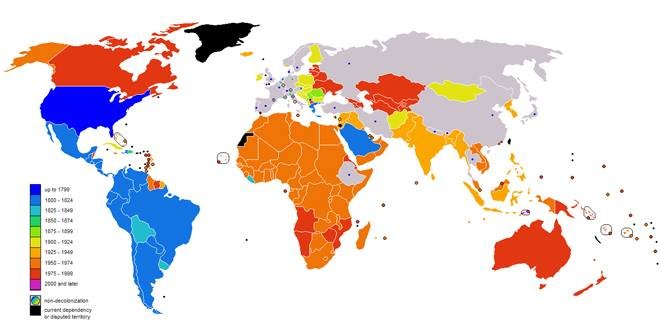
De-Colonization. Modern imperialism and colonialism appeared on the world’s political horizon in the fifteenth century when the European powers like Britain, France, Holland, Portugal, and Spain built their empire by over-powering backward and weak countries of Asia, Africa, and Latin America. These powers ruled the roost for about four hundred years throughout the world. Colonialism … Read more

Detente || The Cold War

Detente

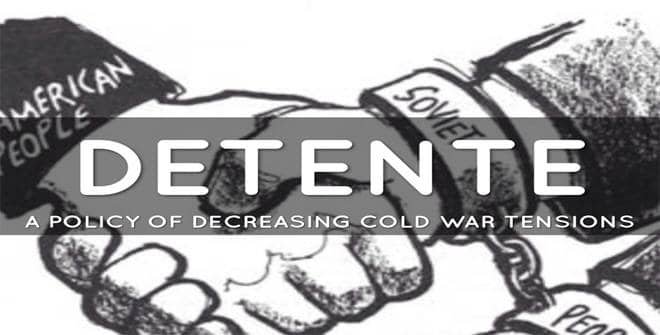
From the late sixties, there is a general shift in East-West relations from the tensions of the cold war to the compulsions and imperatives of detente, especially in military strategy and security. There was a new ray of hope that the advent of detente would reduce international tensions and bring an era of world peace. … Read more

New Cold War

New Cold War

The New Cold War, often referred to as the Second Cold War (1979–1987), marked a renewed phase of hostility between the United States and the Soviet Union after a brief period of détente. Although détente in the early 1970s promised stability through arms control and cooperation, underlying ideological rivalries and strategic competition never truly disappeared. … Read more

Causes Of Cold War

Causes of the Cold War

The Cold War was one of the most defining periods in modern international relations, shaping global politics in the aftermath of the Second World War. Emerging from deep ideological, political, and economic differences, the rivalry between the United States and the Soviet Union divided the world into two hostile blocs—East and West. This era was … Read more