The Rise and Fall of Pre-Capitalist Modes of Production

Pre-Capitalist Modes of Production

The history of human society is deeply tied to the evolution of its economic systems. From the primitive-communal mode of production to slavery and feudalism, each pre-capitalist stage shaped human labor, social relations, and productive forces. Understanding these modes offers crucial insight into how capitalism emerged from the contradictions and class struggles of earlier societies. … Read more

Understanding the Subject Matter of Political Economy: Concepts, Laws, and Social Development

The Subject Matter Of Political Economy

The subject matter of political economy focuses on the social relations that arise in the production, distribution, and exchange of material wealth. As a core social science, political economy analyzes how productive forces, production relations, and economic systems shape society. From Marxist-Leninist theory to modern economic thought, political economy explains the laws governing social development … Read more

Understanding Socialism with Chinese Characteristics

Understanding Socialism with Chinese Characteristics

Socialism with Chinese characteristics is the unique integration of scientific socialism with China’s realities and times. Rooted in Marxist principles yet adapted to China’s economic, political, and cultural context, it guides the nation’s reforms, market economy, and social development. “Socialism with Chinese characteristics is the integration of scientific socialism with China’s reality and the spirit … Read more

The CPC: A Group of Patriotic Leaders Shaping Modern China

The CPC Is a Group of Patriots

The Communist Party of China (CPC) is more than a political organization—it is a collective of patriots committed to the rejuvenation of the Chinese nation. From Deng Xiaoping to Jiang Zemin and Hu Jintao, CPC leaders embraced Marxism not for foreign conquest, but to save and modernize China. Their vision of socialism with Chinese characteristics … Read more

Why Mao Zedong Remains a National Hero in Modern China

Mao Zedong Was a National Hero

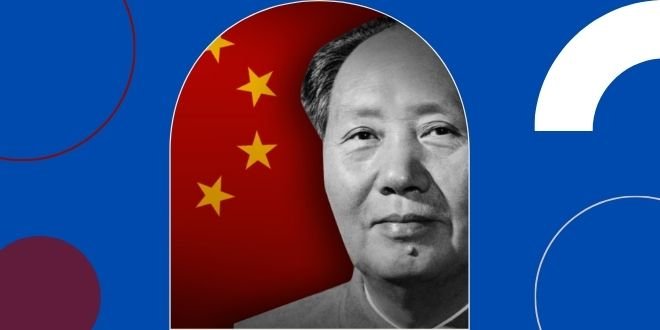
Mao Zedong remains one of the most influential figures in Chinese history, symbolizing national revival, ideological transformation, and cultural identity. Despite controversies surrounding his leadership, Mao’s role in ending foreign domination, shaping modern China, and inspiring generations ensures his enduring presence in Chinese society and political symbolism, including his iconic portrait at Tiananmen Square. “Mao … Read more

The CPC as an Elite Assembly: Power, Membership, and Influence in China

The CPC Is an Assembly of Elites in Chinese Society

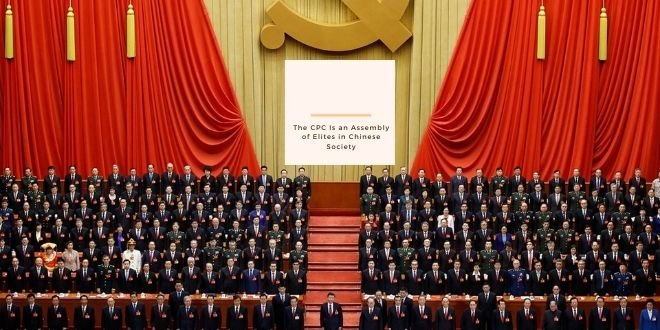
The Communist Party of China (CPC) is often described as a mass political organization, yet its structure reveals a deeper reality: it is also an assembly of elites shaping China’s political, economic, and social trajectory. By combining mass membership with selective recruitment, the CPC maintains authority, social legitimacy, and policy effectiveness. Understanding the Party’s membership … Read more

National Socialism, Communism, and Democracy: Key Differences and Ideological Conflict

National Socialism, Communism, and Democracy

National Socialism, Communism, and Democracy represent three competing political ideologies that shaped the modern world. While National Socialism and Communism emerged from social and economic crises and relied on authoritarian control, Democracy emphasized communication, negotiation, and individual freedom. Understanding their similarities and contrasts reveals how political power, ideology, and human values shape societies and global … Read more

Understanding Totalitarianism: Origins, Characteristics & Modern Threats

Totalitarianism

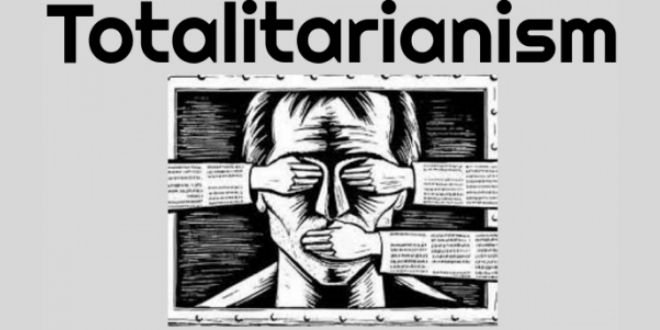
Totalitarianism refers to a political system where the state exercises total control over every aspect of public and private life, abolishing independent institutions and subsuming individuals into a singular national purpose. This ideology emerged prominently in the 20th century under Italian Fascism and German National Socialism and continues to influence concerns about democratic erosion today. … Read more

The Concept of Lebensraum: Geopolitics and Nazi Expansion

Lebensraum

Lebensraum, or “living space,” was a central concept in Nazi ideology, combining geopolitics, racial theory, and imperialist ambition. Rooted in earlier European ideas of political geography, it was popularized by figures like Rudolf Kjellen and Karl Haushofer, and ultimately implemented by Hitler to justify territorial expansion into Eastern Europe. Beyond sentiment and pseudoscience, Lebensraum represented … Read more

The Racial Myth in National Socialism: Ideology, History, and Consequences

The Racial Myth

The racial myth in national socialism was a pseudo-scientific ideology that linked race, culture, and power to justify political dominance and social hierarchy. Rooted in distorted interpretations of history and biology, this doctrine shaped Nazi ideology and policies, influencing twentieth-century politics and leading to catastrophic human consequences. Understanding the racial myth reveals how propaganda and … Read more