Fascism and Hegelianism: The State, Nationalism, and Ideological Conflict

Fascism and Hegelianism

Fascism and Hegelianism share complex philosophical connections rooted in nationalism, anti-liberalism, and theories of the state. While fascist thinkers borrowed elements of Hegel’s political philosophy, their ideological goals often contradicted Hegel’s rational and dialectical framework. Understanding this relationship reveals how fascism reshaped philosophical ideas to justify authoritarian power, nationalism, and totalitarian governance. “Fascism borrowed the … Read more

Philosophy as a Myth: How Political Ideologies Shape Power and Society

Philosophy a Myth

The concept of “philosophy as a myth” reveals how political and social ideologies often function less as rational theories and more as emotionally powerful narratives. From Georges Sorel’s revolutionary myth to fascist and nationalist ideologies, myths have shaped collective identity, justified political action, and mobilized masses beyond logical reasoning. Understanding philosophy as myth offers critical … Read more

Philosophic Irrationalism: How Anti-Reason Shaped Modern Political Thought

Irrationalism: The Philosophic Climate of Opinion

Philosophic irrationalism emerged as a powerful reaction against reason, science, and rational order in modern European thought. Rooted in romanticism and intensified by thinkers like Schopenhauer, Nietzsche, and Bergson, irrationalism elevated will, instinct, intuition, and heroism above logic and equality. This intellectual climate profoundly influenced nationalism, fascism, and anti-democratic ideologies, reshaping political and cultural movements … Read more

Understanding Fascism and National Socialism: Ideology, History, and Impact

Fascism and National Socialism

Fascism and National Socialism emerged in the early 20th century as radical political movements in Italy and Germany. Unlike communism, which developed as a coherent philosophical system, these ideologies were opportunistic, synthetic, and emotionally driven. Their leaders leveraged nationalism, anti-communism, and promises of economic stability to consolidate power, often bypassing democratic institutions and individual liberties. … Read more

The Temper of Communism: Lenin, Morality, and Soviet Leadership

The Temper of Communism

Lenin transformed Marxist theory into a practical framework for revolutionary action, giving communism a moral and political temperament that has shaped Soviet governance for decades. Beyond intellectual abstraction, Lenin’s vision emphasized a militant dedication to the party and the cause, creating a system where morality, politics, and economic planning were inseparably intertwined. Today, the legacy … Read more

Mao and the Rise of Communism in China: A Historical Overview

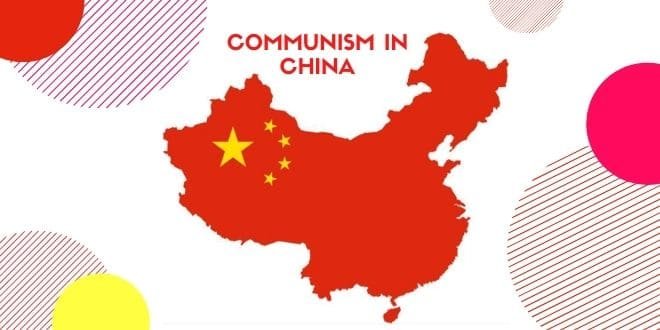
Communism in China

Communism in China transformed from an imported ideology into a uniquely Chinese revolution under the leadership of Mao Tse-tung. Beginning in the early 1920s, Mao adapted Marxist-Leninist principles to China’s largely peasant society, emphasizing rural-based revolution, guerrilla warfare, and the central role of the peasantry. From his early philosophical studies to the Cultural Revolution, Mao … Read more

Socialism in One Country: Stalin’s Theory and Its Global Impact

Socialism in One Country

“Socialism in One Country” was Stalin’s most influential theoretical contribution to communism, reshaping Marxism and Leninism into a nationalist model of socialism. By asserting that socialism could be built within a single state rather than requiring global revolution, Stalin transformed Soviet Russia into an industrial and military power. This doctrine not only altered Marxist theory … Read more

Democratic Centralism: Lenin’s Model of Party Power and Control

Democratic Centralism

Democratic centralism is a political and organizational principle developed by Vladimir Lenin to structure communist parties and revolutionary movements. It combines internal debate with strict unity in action, creating a hierarchical system where decisions made by higher authorities bind all lower levels. This model shaped the governance of the Soviet Union and influenced communist movements … Read more

The Vanguard of the Proletariat: Lenin’s Blueprint for Communist Rule

The Vanguard of the Proletariat

The concept of the vanguard of the proletariat lies at the heart of Lenin’s revolutionary strategy. It describes a disciplined, elite segment of the working class tasked with leading society toward socialism, guiding the broader proletariat while maintaining centralized authority. This doctrine shaped the Bolshevik Party, the Communist International, and ultimately the governance of the … Read more