How Kinship, Religion, Industry & War Shaped the Origin of the State
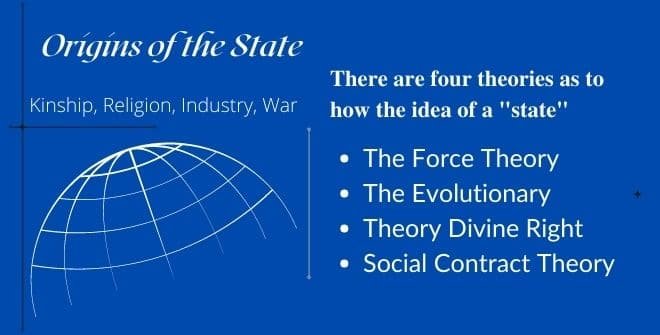
The origin of the state

The origin of the state is not pinned to a single moment in history. Instead, it evolved gradually as human societies grew more complex. Early social units based on kinship, religion, economic activity, and warfare laid the foundations for political organization. Over time, these forces interacted and merged, leading to the emergence of the modern … Read more
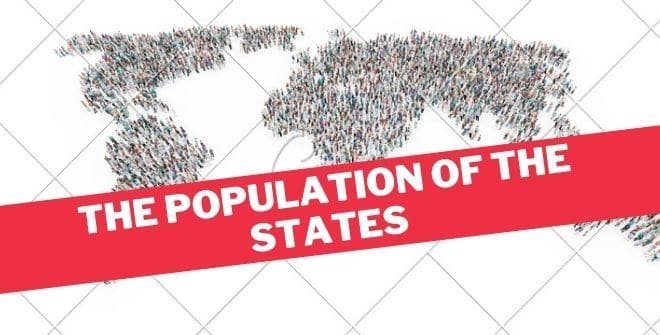
The Population Of The States

The Population Of The States

The population of the United States is not just a count of people — it’s a powerful force that influences every aspect of national life. From the size and distribution of people across states to age structure, racial makeup, and growth trends, demographic dynamics affect political power, economic activity, and social policy. Understanding how population … Read more

Importance of the State’s Physical Basis in Political Development

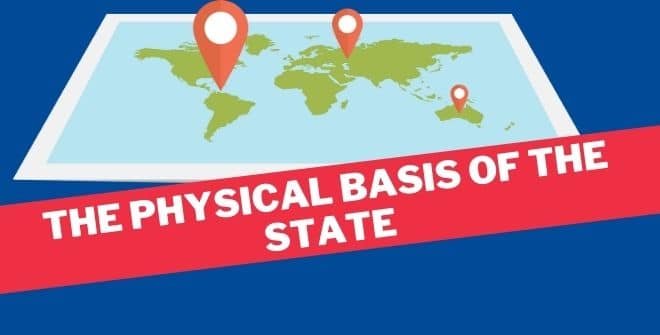
The Physical Basis Of The State

The physical basis of the state—territory, population, climate, and natural resources—plays a decisive role in shaping political organization, governance, and national power. While political science primarily examines institutions and authority, it cannot ignore the natural environment in which states emerge and evolve. Geography influences isolation or interaction, security or vulnerability, economic growth or stagnation, and … Read more

Need for Analysis of the State: Meaning, Elements, and Sovereignty

Analysis of the state

The analysis of the state is fundamental to political science because the state is its central subject of study. Although states appear in diverse historical and institutional forms, they share common purposes and essential characteristics. By abstracting from time-bound and cultural variations, political theory identifies the core elements of the state—population, territory, government, and sovereignty. … Read more

Associations of States

Associations of States

International associations of states arise when two or more sovereign countries cooperate to regulate shared political, economic, or administrative interests. Unlike federations, these associations preserve state sovereignty while enabling collaboration through treaties, alliances, confederations, and global organizations such as the United Nations. Understanding the nature, types, and evolution of international associations is essential to modern … Read more

Understanding the Theory of Social Contract: Origins, Thinkers & Modern Relevance

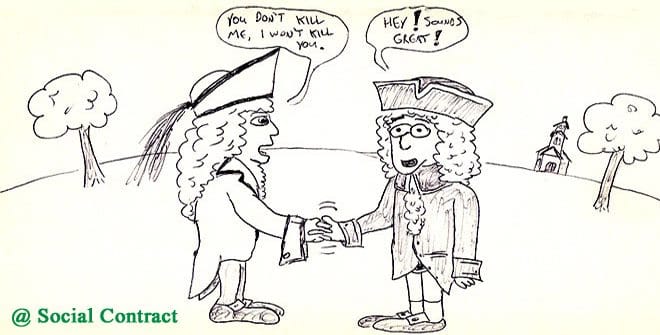
The Theory Of Social Contract

The Theory of Social Contract explains how humans transitioned from a pre-political state of nature into organized civil society through mutual consent. Advocated by Hobbes, Locke, and Rousseau, this political philosophy argues that individuals willingly surrendered certain natural freedoms to form a governing body that ensures security, law, and order. Today, the principles of this … Read more

Understanding the Force Theory of the Origin of the State: Meaning & Criticism

Force Theory Of Origin Of State

The Force Theory of Origin of the State explains how early political communities emerged through conquest and domination. According to this theory, the State was established when stronger individuals or groups subjugated the weak through force, creating social order and governance. Though historically influential, it remains controversial because it suggests that power and coercion—rather than … Read more

Divine Theory of Origin of the State: Meaning, Doctrine, and Evaluation

Divine Theory Of Origin Of State

The origin of the State has long fascinated political thinkers, yet it remains shrouded in mystery. While anthropology and comparative studies shed partial light, they fall short of offering a definitive explanation. As a result, scholars developed speculative theories to understand how the State came into existence. Among these, the Divine Theory of Origin of … Read more

Understanding the Organic Theory of the State: Interdependence of Individuals & Society

The Organic Nature Of The State

The Organic Theory of the State argues that the State functions like a biological organism, where individuals—like cells—are interdependent parts of a larger whole. This theory contrasts sharply with individualistic views that see society as just a collection of isolated individuals. Exploring this theory reveals deep insights into political philosophy, the role of government, and … Read more