Niccolò Machiavelli: Father of Modern Political Thought
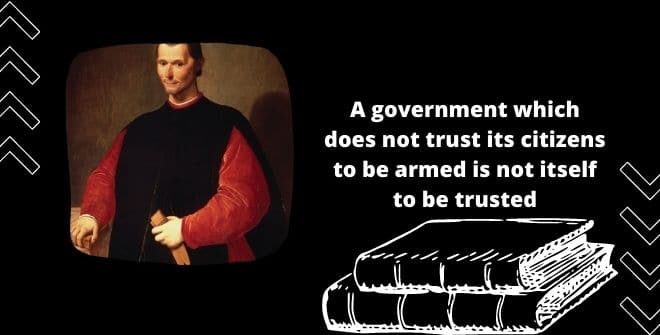
Niccolo Machiavelli

Niccolo di Bernardo dei Machiavelli rarely rendered Nicholas Machiavel was an Italian diplomat, author, philosopher, and historian who lived during the Renaissance. He is best known for his political treatise The Prince, written about 1513. He has often been called the father of modern political philosophy and political science. “It is better to be feared … Read more
How Fifteenth-Century Jurists Shaped Modern Legal and Political Thought

The Jurists of the Fifteenth Century

The fifteenth century witnessed a profound transformation in legal and political theory, driven by jurists who studied Roman law and applied it to evolving ecclesiastical, civic, and state institutions. Their exploration of corporate personality, natural law, and representation laid the groundwork for modern concepts of popular sovereignty, legal entities, and democratic governance. These jurists bridged … Read more

The Conciliar Movement: Church Reform and Early Democratic Ideas

The Conciliar Movement

The Conciliar Movement was a reform movement in the 14th-, 15th- and 16th-century Catholic Church which held that supreme authority in the Church resided with an ecumenical council, apart from, or even against, the pope. The movement emerged in response to the Western Schism between rival popes in Rome and Avignon. “The authority of the … Read more

How Wycliffe and Hus Shaped Political Thought in Medieval Europe

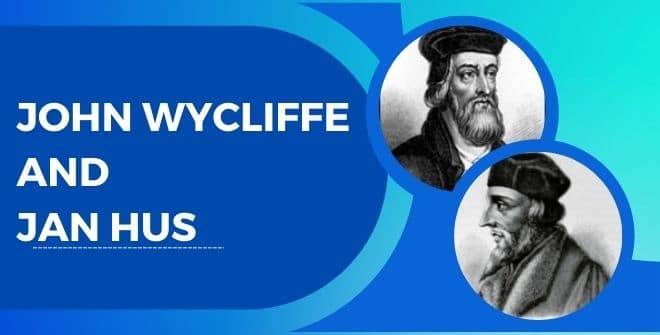
John Wycliffe and Jan Hus

The tendencies of the later part of the medieval period were reflected in the doctrines of John Wycliffe  (1320-1384) in England and Jan Hus (1369-1415) in Bohemia, and in the national, anti-papal, and democratic movements for which their teachings were held responsible. While both Wycliffe and Hus devoted themselves mainly to theological questions, they were … Read more

Major Political and Economic Trends in the Middle Ages

General Tendencies during the Middle Ages

The Middle Ages (c. 500–1500 CE) were a transformative period in European history. Marked by the decline of feudalism, the rise of national monarchies, the growth of commerce and cities, and shifts in ecclesiastical authority, this era laid the foundations for modern political and economic structures. Understanding the general tendencies of this period reveals how … Read more

Marsilius of Padua and Ockham: Foundations of Modern Political Thought

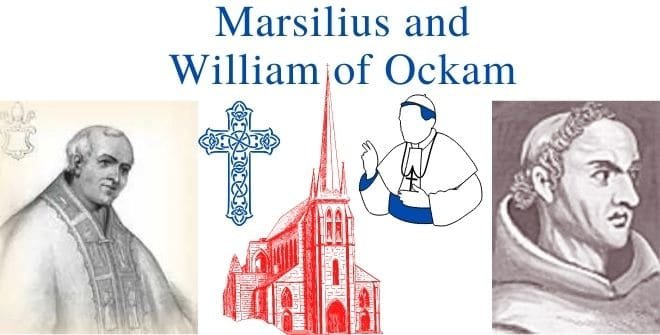
Marsilius and William of Ockam

In the third part of his Dialogues, William of Ockam briefly dealt with Marsilius of Padua’s theory of conciliar infallibility. By contrast, none of the contemporary papal responses to the Defensor pacis discussed the Marsilius anti-papal conciliar program. Marsilius of Padua The greatest and most original political treatise of the Middle Ages was the work … Read more

Dante Alighieri and the Logic of Imperial Authority

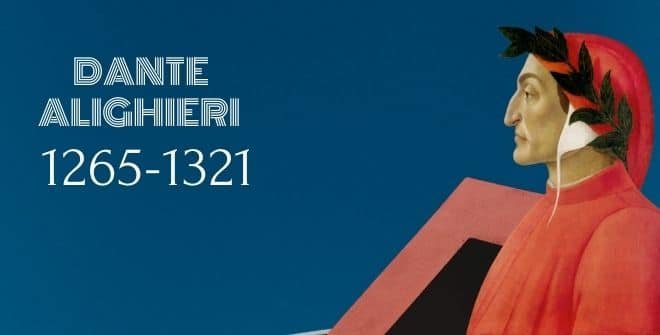
Dante Alighieri

The most logical and systematic statement of the imperial theory was that of Dante Alighieri (1265-1321 ). Dante had considerable experience in the politics of his city (Florence); and in his wanderings from city to city and from court to court during his long exile, he gained valuable knowledge and experience. “The best peace is … Read more

Fourteenth Century Church and State Controversies: The Decline of Papal Supremacy

The Fourteenth Century Controversies

The Fourteenth Century Church and State Controversies marked a turning point in European political history. The conflict between Pope Boniface VIII and Philip IV of France ignited a broader struggle between ecclesiastical supremacy and emerging national monarchies. From the Avignon Papacy to disputes with the Holy Roman Emperors like Louis IV, this period reshaped medieval … Read more

Saint Thomas Aquinas: Medieval Political Philosophy and Law

Saint Thomas Aquinas

Saint Thomas Aquinas (1227–1274), the eminent Italian Dominican theologian, remains a cornerstone of medieval scholastic thought. He harmonized reason and faith, integrating Aristotelian philosophy with Christian doctrine. His insights on natural law, political authority, and the relationship between church and state shaped Western political philosophy, emphasizing justice, monarchy, and divine guidance. “Law is an ordinance … Read more

St. Bernard and John of Salisbury: Church Supremacy and Medieval Political Thought

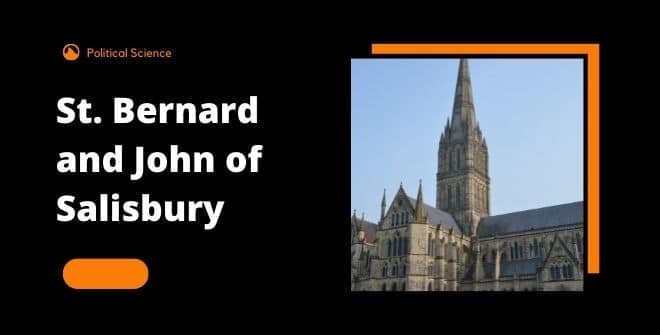
St. Bernard and John of Salisbury

The twelfth century witnessed intense debate over the relationship between spiritual and secular power. Two of the most influential thinkers in this debate were St. Bernard of Clairvaux and John of Salisbury. Both defended the supremacy of the Church while criticizing its moral corruption. Their writings shaped medieval political theory, influenced constitutional development, and strengthened … Read more